7 Rules for Trading Meme Coins That Pros Actually Follow
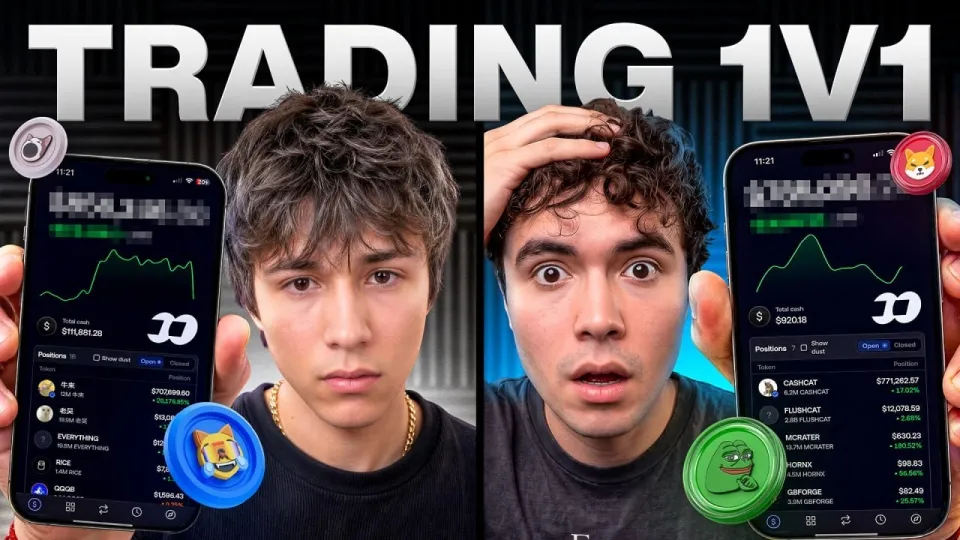
Video: I Challenged A Pro Memecoin Trader (Who Won?)
Need articles like this for your video? They help promote it on YouTube and Google — order them in the Telegram bot @sat_sit_bot. It writes articles around your video, embeds the video and publishes them on popular niche websites (no ads). Try it free: 50 articles on us.
· based on the channel insentos
Key takeaways
- Meme coin trading is a high-variance game: most retail participants who stream live sessions end up down, which is why position sizing matters more than pick quality.
- A pro trader in the insentos challenge kept explaining the reasoning behind each entry and exit while actively trading, rather than chasing candles in silence.
- Tools used in the session: Axiom for execution and FOMO.Family for community and deal flow, both linked in the video description.
- The most requested follow-up from viewers was a 50-to-1000 bankroll challenge, a format that tests risk management, not luck.
- Beginners consistently ask about joining private groups and copying calls, but the video's real lesson is building an independent process.
Meme coin trading is the practice of buying and selling tokens with no cash flow, no product and no fundamental valuation, where price is driven almost entirely by attention, liquidity and the speed of other traders. The only reliable edge in this market is process: fixed position sizing, a pre-planned exit, and a written reason for every entry before you click buy. A live challenge on the insentos channel, where a professional meme coin trader went head-to-head with the host, is a useful case study because it shows that process under real conditions — you can watch the full session and register through the FOMO.Family link from the video if you want to follow the same community flow.
What the pro-vs-amateur meme coin challenge actually showed
The challenge format is simple: two traders, the same market, the same screen, and a scoreboard at the end. What makes it instructive is not who won but how differently the two approached each trade. The guest kept narrating his thinking while managing live positions — why this token, why this size, where the invalidation level sits — and even reminded the host mid-trade that the session was supposed to teach something. That single habit, explaining your thesis out loud before entering, is the fastest way to find out whether you actually have a thesis.
Viewers noticed the same thing. The most-liked comments praised the guest for staying informative while trading, and several people said the format should become a weekly series. Others pointed out the uncomfortable truth: in most videos of this type, the streamer ends up losing, which makes the whole exercise look closer to gambling than to trading. Both reactions are correct, and together they define the lesson — live meme coin trading is a variance showcase, and what you copy from it should be the risk framework, not the tickers.
Rule 1: size every meme coin position as if it can go to zero
Position sizing is the only variable a trader fully controls in a market where any token can lose 90% in minutes. A practical rule is to risk a fixed small percentage of your bankroll per idea — an amount you can lose ten times in a row without changing your behaviour. If a loss would make you refresh the chart every thirty seconds or move your stop, the position is too big regardless of how good the setup looks.
This is also why the 50-to-1000 style bankroll challenge that viewers kept requesting is a real test and not a stunt: it forces small size, fast feedback and discipline about which setups are worth taking. Anyone can look sharp with a large account and one lucky runner.
Rule 2: check liquidity and holder distribution before the chart
Liquidity and holder concentration decide whether you can exit, not whether the token pumps. Before entering any Solana or Ethereum meme coin, look at how much liquidity sits in the pool, what share the top wallets hold, and whether the contract has been abandoned or is still controlled by a deployer with special permissions. A thin pool means your own sell order moves the price against you.
A quick checklist worth running on every candidate:
- Pool liquidity relative to your position size — can you exit without double-digit slippage?
- Top-10 wallet concentration — if a handful of addresses hold most of the supply, you are exit liquidity.
- Contract status — mint authority revoked, no hidden fees, no obvious honeypot behaviour.
- Age and volume pattern — organic growth versus a single vertical candle on fake volume.
Rule 3: write the exit before you write the entry
Every meme coin trade needs two numbers decided in advance: the price where you take profit and the price where you admit you were wrong. Traders who enter first and improvise later almost always hold losers and cut winners, which is the exact opposite of what the math requires in a fat-tailed market. A common structure is scaling out in tranches — sell part into the first spike, part into strength, and leave a small runner only if the token keeps printing higher lows.
Scalping and swing approaches both work, but they need different exit logic. A scalp lives or dies on seconds and slippage; a swing trade needs a thesis about community growth and attention that can survive a 40% drawdown. Mixing the two — entering as a scalp and holding as an investment — is how small losses become total ones.
Rule 4: treat tools as infrastructure, not as signals
The video's description points to Axiom (axiom.trade) for execution and to FOMO.Family for community access, and that split is a fair picture of how a modern meme coin workflow is built. A terminal gives you speed: fast fills, wallet tracking, charts that update in real time. A community gives you deal flow and second opinions. Neither tells you what to buy.
New traders often invert this and treat a call in a group chat as a signal to ape. The healthier use of any group is the opposite: bring your own candidate, ask what others see that you missed, and keep the decision yours. If a community makes joining deliberately difficult or pushes urgency, that is information about the community, not about the token.
Rule 5: separate the trader's account from the audience's expectations
One recurring doubt in the comments is that results look different when you trade from an account with reach, because attention itself moves price. That is a real effect and it cuts both ways: a large following can create exit liquidity for the person posting, and it can also make a trader look better than the underlying skill warrants. When you watch any live trading session, ask whether the edge would survive if nobody were watching.
For your own trading, the equivalent discipline is to ignore social proof as a signal. Follower counts, view counts and screenshots of gains are not data about the next candle. The only numbers that matter are your entry, your size, your exit and your realised result over a sample of at least fifty trades.
Rule 6: build a feedback loop instead of chasing the next call
The gap between a beginner and a professional in meme coins is mostly a gap in record-keeping. Professionals review trades, tag each one by setup type, and drop the setups that lose money after costs. Beginners remember the wins and forget the losses, so the same mistake repeats for months.
A minimal loop looks like this: log every trade with the reason for entry, the size, the exit and the outcome; once a week, group them by setup; cut whatever has a negative expectancy after fees and slippage. Do this for a quarter and you will know more about your own edge than any course can teach you.
Rule 7: accept that most meme coin trades are noise
Most meme coin trades should not be taken. The market produces hundreds of new tokens daily, and the handful that produce life-changing returns are statistically rare; the professional approach is to pass on almost everything and take only setups that match a tested pattern. Sitting out is a position, and it costs nothing.
This is the honest answer to the worry that live trading videos are just gambling dressed up as content. The format is entertainment, and the guest in the insentos challenge made it educational by narrating decisions rather than outcomes. Copy the decision framework, not the entries.
Useful links
- FOMO.Family — community access and registration via the video's referral link
- Axiom — trading terminal used in the session
- insentos on X
- insentos on Instagram
- insentos on TikTok
Bottom line
A pro-versus-amateur meme coin challenge is worth watching only if you extract the process behind the trades: fixed risk per idea, liquidity checks before charts, exits defined in advance, and a written record you review weekly. The insentos channel built the session around exactly that kind of narration, which is why beginners in the comments called it one of the more useful formats on the topic. If you want to follow the same workflow, start with the FOMO.Family registration link, pair it with a terminal like Axiom, and keep your first hundred trades small enough that no single one can end the experiment.
Questions & answers
How much money do you need to start trading meme coins?
You can start with a very small bankroll, but the number matters less than the sizing rule. Pick an amount you can lose ten times in a row without changing your behaviour, and risk only a fixed fraction of it per trade. A small account forces discipline and makes fees and slippage visible, which is exactly what a beginner needs to learn.
Is meme coin trading just gambling?
It sits close to gambling when entries are based on calls, urgency and screenshots of gains. It becomes trading when each position has a predefined size, invalidation level and exit plan, and when results are reviewed over a large sample. Live challenge videos often end in a loss precisely because variance dominates short sessions.
Why do streamers and big accounts seem to win more often?
Attention itself moves price, so a trader with a large audience can influence the market they are trading and may benefit from followers buying after them. That edge does not transfer to a viewer copying the same entry later. Judge any strategy by whether it would still work if nobody were watching.
Which tools does a meme coin trader actually need?
A fast execution terminal with reliable charts and wallet tracking, plus a community for deal flow and second opinions. The session referenced Axiom for trading and FOMO.Family for community access. Tools speed up execution and research, but they never replace your own entry and exit rules.
Source: I Challenged A Pro Memecoin Trader (Who Won?) · Markdown version